Compliance Checklists
How to Get a CDL License in California in 7 Steps

TL;DR: Getting a CDL in California requires applicants to choose the correct license class, meet eligibility and medical requirements, earn a commercial learner’s permit, complete required training, and pass a three-part skills test. The process includes a minimum 14-day CLP holding period and must be completed within the 12-month application window.
- Drivers ages 18 through 20 are limited to intrastate operation; interstate driving and hazardous materials transportation require drivers to be at least 21.
- Original Class A and B applicants must complete ELDT and at least 15 hours of California behind-the-wheel instruction.
- CLP holders must practice with a properly licensed California CDL holder.
- The skills test covers vehicle inspection, basic controls, and road operation.
- After licensing, drivers must keep their medical status and endorsements current while following applicable HOS, recordkeeping, and ELD requirements.
Getting a California commercial driver’s license requires several discrete steps, which means it requires more than passing a single test. First-time applicants start with a commercial learner’s permit. Then, they need to complete required training, hold the permit for at least 14 days, and, finally, pass the state’s three-part skills test.
This guide explains how to get a CDL license in California in seven steps. It covers the license class you need, California’s training requirements, and what happens after you pass.
How Do You Get a Commercial Driver’s License in California?
In short, here’s how to get a CDL in California:
- 1. Choose the correct CDL class and endorsements.
- 2. Confirm that you meet California’s eligibility and medical requirements.
- 3. Apply for a commercial learner’s permit and pass the required knowledge tests.
- 4. Complete federal and California training requirements.
- 5. Hold the CLP for at least 14 days and practice with a qualified CDL holder.
- 6. Pass the vehicle inspection, basic controls, and road tests.
- 7. Complete the final paperwork and receive your CDL.
Current DMV notice, October 2026: California has paused issuing non-domiciled CLPs and CDLs to applicants with limited legal presence. Because this is a temporary policy, affected applicants should verify its status before beginning the process.
Step 1: Which California CDL Class and Endorsements Do You Need?
The CDL class determines the type and size of vehicle you can operate:
- Class A: Generally covers a combination of vehicles with a gross combination weight rating of at least 26,001 pounds when the towed vehicle has a gross vehicle weight rating above 10,000 pounds.
- Class B: Generally covers a single vehicle with a gross vehicle weight rating above 26,000 pounds, including one towing a vehicle rated at 10,000 pounds or less. California also includes certain three-axle vehicles weighing more than 6,000 pounds.
- Commercial Class C: Covers a Class C vehicle that requires a commercial endorsement, such as passenger, tank, or hazardous materials.
Be aware that certain passenger vehicles, school buses, tank vehicles, double or triple trailers, and hazardous materials may require additional endorsements, tests, or training.
Choose the class and endorsements before preparing for the knowledge tests. Changing them later can mean more testing and another trip to the DMV.
Step 2: Do You Meet California’s CDL Requirements?
An applicant must be at least 18 years old and hold a California noncommercial Class C driver’s license before receiving a CLP.

Drivers ages 18 through 20 are limited to intrastate commercial driving. You must be at least 21 to operate in interstate commerce or transport hazardous materials or hazardous waste.
Applicants also need to:
- Provide the identity and residency documents required for their situation
- Submit a 10-Year History Record Check if they held a license in another state or jurisdiction during the previous 10 years
- Self-certify the type of commercial operation they expect to perform
- Meet the applicable medical requirements
- Pay the nonrefundable application fee
Complete the required medical examination with an appropriately qualified examiner. As of July 27, 2026, an interstate applicant cannot submit their own medical examination records to the California DMV. The certified medical examiner sends the results electronically through the National Registry. Intrastate applicants may still use the submission methods permitted by the DMV.
The DMV also checks the federal Drug and Alcohol Clearinghouse. It cannot issue or upgrade a CLP or CDL while the applicant has a prohibited status. That check is separate from the pre-employment drug test a covered motor carrier may require before allowing a driver to perform safety-sensitive work.
Step 3: How Do You Get a Commercial Learner’s Permit?
Complete California’s online CDL application, then visit a DMV office to finish the CLP process.
At the office, you will provide the required documents, pay the application fee, have your thumbprint and photograph taken, and complete the knowledge tests for your chosen class and endorsements.
You have three attempts to pass each required knowledge test. Failing the same test three times invalidates the application, which means you will need to apply and pay again.
Once you pass, the DMV issues your commercial learner’s permit. A CLP is normally valid for up to 180 days. It may be renewed for another 180 days as long as the expiration remains within one year of the original application date.
The CDL application and fee are valid for 12 months. If you don’t finish the knowledge tests, training, and skills test within that period, you must reapply.
Step 4: What CDL Training Does California Require?
Federal Entry-Level Driver Training applies when a driver is:
- Obtaining a Class A or Class B CDL for the first time
- Upgrading from a Class B CDL to a Class A CDL
- Obtaining a school bus, passenger, or hazardous materials endorsement for the first time
The training must come from a provider listed in the FMCSA Training Provider Registry. The provider reports completion electronically so the DMV can verify it before the applicable test.
Federal ELDT rules don’t set one required number of training hours. Instead, the applicant must complete the curriculum and demonstrate proficiency.
California adds an hourly requirement for original Class A and Class B applicants: at least 15 hours of behind-the-wheel instruction, including at least 10 hours on a public road. Simulator time doesn’t count toward that total.
The training provider completes Form DL 1236. The form must be submitted to the DMV before the CDL can be issued.
Step 5: How Long Must You Hold and Practice With a CLP?
You must hold the CLP for at least 14 days before taking the CDL skills test.
While operating a commercial vehicle with the permit, carry both your CLP and California driver’s license. A California CDL holder with the correct license class and endorsements must accompany you.
The waiting period and training can overlap. The 14-day clock begins when the CLP is issued, while behind-the-wheel instruction and supervised practice take place.
Fourteen days is the minimum waiting period, not a substitute for preparation. Use the time to practice in the same type of vehicle and configuration you plan to use for the test.
Step 6: What Happens During the California CDL Skills Test?
Schedule the test with a commercial DMV testing office and bring a vehicle that represents the class of CDL you want.
The skills test has three parts:
Vehicle inspection: Show that you can inspect the vehicle and identify safety-related components.
Basic control skills: Complete the required low-speed maneuvers.
Road test: Demonstrate safe vehicle operation in traffic.
You must pass all three portions. Applicants receive three attempts, and the DMV charges a fee for each retest.
Testing in a vehicle with an automatic transmission, without full air brakes, or in a Class A combination without a fifth-wheel connection might place related restrictions on the CDL, so choose carefully.
Step 7: What Happens After You Pass the CDL Test?
Before issuing the license, the DMV must have the required training record and California behind-the-wheel certification.
Under the standard process, the DMV issues an interim CDL after you pass the skills test and complete the remaining requirements. The interim license is valid for 60 days.
Review its class, endorsements, and restrictions before driving commercially. If the permanent CDL has not arrived after 45 days, contact the DMV to check its status.
How Do You Get a CDL Class A License in California?
To get a CDL Class A license in California, follow the same seven-step process while applying and training specifically for Class A combination vehicles.
You will need the required knowledge tests, Class A ELDT, and California’s behind-the-wheel instruction. You must then pass the three-part skills test in a combination that qualifies for Class A operation.
Choose the test vehicle carefully. Its transmission, braking system, and trailer connection can affect the restrictions placed on the license.
A Class A CDL does not automatically include every endorsement. Tank, hazardous materials, passenger, school bus, and double or triple trailer work may carry separate requirements.
How Long Does It Take to Obtain a CDL in California?
The only fixed minimum is the 14-day period between receiving the CLP and taking the skills test.
The full process often takes several weeks or longer. Timing depends on the medical examination, training-provider schedule, supervised practice, test-vehicle access, and DMV appointment availability.
You must complete the process within the 12-month application period. Although a CLP can be renewed under certain conditions, renewal does not extend the original application beyond that one-year limit.
How Much Does a California CDL Cost?
As of October 2026, the California DMV licensing fees list:
- $100 for an original commercial Class A or Class B application
- $59 for an original commercial Class C application
- $46 for a commercial driving or skills retest
Those amounts do not represent the total cost of getting a CDL. Medical examinations, driver training, endorsements, and access to a test vehicle can add separate expenses.
Check current DMV fees and request written pricing from the training provider before building your budget.
What Requirements Continue After You Earn a CDL?
The steps above explain how to get your CDL in California. Maintaining it depends on what happens after you receive it.
Drivers must keep their medical qualification, license class, and endorsements current. Applicable DOT rules and regulations for truck drivers may also govern hours of service, vehicle inspections, cargo securement, drug and alcohol testing, and required operating records.
Hit the Road with My20 ELD from Konexial
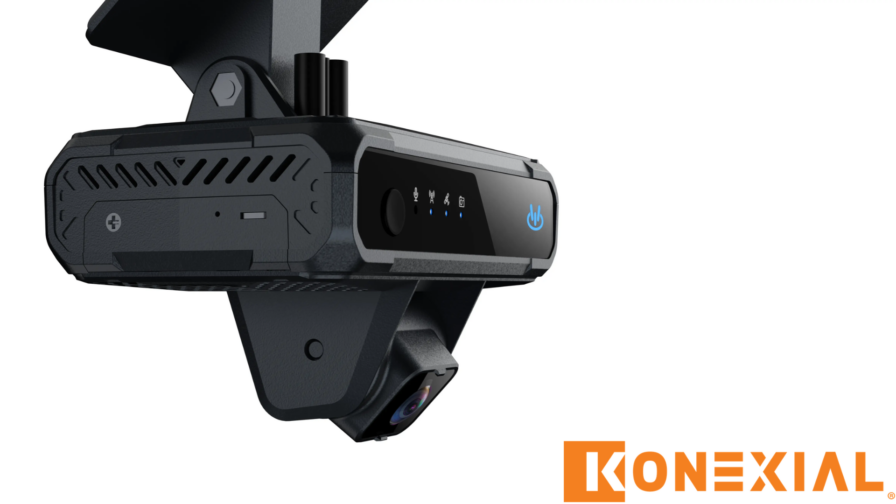
Many drivers who prepare records of duty status must use a registered electronic logging device unless an exception applies. Konexial’s My20 ELD records driving time and supports HOS and RODS work once a driver enters service. It does not replace required licensing, training, or the driver’s responsibility to maintain accurate logs.
Licensing gets a driver into the seat. Current hours and records help determine what work can happen next.