Compliance Checklists
Best AI Dash Camera for Trucks (2026)
Choosing an AI dash camera platform directly affects coaching quality, compliance readiness, and how quickly Transportation and Safety teams respond to risk.
However, most comparison guides stop at a feature checklist.
To provide a more practical perspective, this article evaluates six platforms across the workflows that ensure video telematics data reaches the right people at the right time. Ultimately, Konexial leads the list by unifying AI dash camera footage, ELD data, and driver coaching in one operational view powered by Ki™ intelligence.
Best for All-In-One Fleet Integration

Below, you will find a breakdown of coaching automation, compliance evidence handling, and real-time visibility for each platform. Ultimately, you can use these insights to shortlist the vendor that best fits how your fleet actually operates.
Quick guide: 6 best AI dash camera platforms for fleets
- Konexial: The best unified AI dash camera and fleet operations platform for mid-sized trucking fleets that need coaching, compliance, and video telematics in one view.
- Samsara: Broad camera hardware lineup with automated event triage for fleets running dedicated safety departments.
- Motive: AI event validation engine with option for coaching drivers.
- Geotab: Telematics-first approach with modular camera add-ons for fleets already embedded in the MyGeotab ecosystem.
- Verizon Connect: Edge-computing dashcams with in-cab audio alerts for fleets focused on immediate driver correction.
- Platform Science: Open connected-vehicle platform with a DashCam add-on for carriers building a custom safety stack.
How do you know Konexial will be the right fit?
We evaluated each platform based on what fleet managers and safety directors handle daily. Rathert han focusing solely on spec sheets, we examined how each platform connects camera events, coaching conversations, and compliance records.
- Coaching workflow automation: Does the platform route flagged events, automate coaching, and track driver improvement without manual steps?
- Compliance evidence handling: Can Safety teams access timestamped, GPS-verified records for audits, insurance reviews, and investigations in one dashboard?
- Video telematics integration: Does camera footage connect with ELD, HOS, DVIR, and route data to provide operational context?
- False-positive management: Does AI filter irrelevant clips before they reach drivers and managers?
- Cross-team visibility: Can Transportation and Safety teams access shared, real-time data from one dashboard?
- Cross-team visibility: Can Transportation and Safety teams access shared, real-time data from one dashboard?
The 6 best AI dash camera platforms for fleets

1. Konexial: Best overall AI dash camera platform for fleets
Konexial brings fleet dash cameras and daily operations together in one platform instead of treating them as separate tools. For example, its AI Dash Camera sends HD video from road-facing and cabin-facing cameras to the Konexial One dashboard. There, teams can view footage alongside ELD logs, DVIR records, dispatch data, and driver coaching tools.
As a result, Safety Teams spend less time managing separate systems. Instead, they can connect camera events with other fleet data in one place. When an AI-detected event occurs, Ki™ intelligence sends it to the right manager with useful details. Then, teams can review the event, coach the driver, and record the outcome in the same platform.
At the same time, managers can access HOS records, DVIR compliance data, and trip details without switching between systems. This makes daily safety tasks easier to manage.
Ultimately, mid-sized trucking fleets with small safety teams can reduce manual work and coach drivers faster. In addition, their compliance records stay organized for audits and insurance reviews.
Konexial features
Unified coaching and compliance dashboard: First, teams can view AI-flagged events, driver scorecards, HOS data, and DVIR records in one place.
Ki™-powered event routing: In addition, Ki™ ranks events by severity and sends them to the right manager, reducing manual video reviews.
Auxiliary camera expansion: Also, Wi-Fi-connected cameras add side and other viewing angles without extra cables. Footage is stored on a 64GB SD card.
Cloud video storage with six-month retention: Meanwhile, AI-flagged clips are stored in the Konexial dashboard for six months, helping teams gather evidence for insurance reviews.
Detection of distracted driving: Furthermore, AI can detect seat belt violations, cell phone use, eating, smoking, drowsiness, and other risky driving behaviors in real time.
Quick, simple installation: Finally, the camera takes about ten minutes to install with a locking bracket, helping fleets avoid long delays and special setup needs.
Konexial pros and cons
Pros:
- Combines AI dash camera data with ELD, dispatch, and compliance tools in one platform, removing the need for separate video management software.
- Ki™ intelligence automates event prioritization and coaching workflows, keeping lean safety departments focused on high-severity events.
- U.S.-based support, weekly platform updates, and onboarding tailored to your workflows mean you are never left managing adoption alone.
Cons:
- Fleets that only need a standalone camera without broader fleet management may find the full platform offers more capability than their current workflow requires.
- The platform is optimized for commercial trucking. While optimized for heavy trucking, non-commercial and mixed fleets can still leverage customized deployment assistance to align the system with their specific operational setup.

2. Samsara: Broad camera hardware lineup with automated coaching workflows
Samsara offers several AI dash camera options, including dual-facing, front-facing, multicam, and fisheye auxiliary cameras.
Additionally, its risk model reviews about 50 factors per event to help managers focus on the most important clips first. Samsara also automates driver coaching. For example, drivers can review some events themselves, while managers handle more serious cases. However, fleets using a separate TMS or ERP may need to manage safety data and daily operations in different systems.
For fleets with dedicated safety teams, this setup may work well. Still, teams may need extra steps to share information across systems.
Samsara features
AI event review: First, the risk model sorts safety events by severity, helping managers focus on the most serious risks.
In-cab AI coaching: Additionally, an AI avatar gives drivers feedback after their shifts, reducing the need for manager support.
Collision and pedestrian alerts: Finally, camera alerts warn drivers about possible crashes and nearby pedestrians, giving them more time to react.
Samsara pros and cons
Pros:
- Multiple camera form factors allow fleets to mix hardware across different vehicle types and use cases.
- The AI risk model considers around 50 factors per event, adding depth to event prioritization.
- Gamification and recognition features let managers reward positive driving behaviors alongside coaching for unsafe events.
Cons:
- The platform does not include native TMS or dispatch tools, so fleets need a separate system for load execution and route management.
- Coaching workflow customization requires dedicated safety admin time to configure thresholds and escalation rules.
- Video and telematics data operates within Samsara’s ecosystem, which limit integration flexibility with third-party reporting tools.

3. Motive: AI event validation for false-positive filtering
Motive offers dual-facing and road-facing AI dashcams that detect over 20 safety risks. These include phone use and unsafe lane changes. Additionally, its Event Validation Engine (EVE) uses cloud-based AI and an in-house safety team to review flagged events. As a result, fewer false alerts reach managers and drivers.
Next, the platform sends drivers personal AI feedback after each confirmed event. Managers can also provide structured coaching when unsafe habits continue. However, Motive lacks built-in tools for fleet compliance and dispatch. Therefore, teams must use a separate platform to manage daily operations.
Motive features
- EVE event validation: Cloud AI assigns scores to every safety event, automatically filtering events so drivers are not penalized for things the AI is unsure of.
- AI Coach: Drivers receive personalized, AI-generated coaching videos that highlight both positive behaviors and specific unsafe events from their shift.
- Customizable safety scoring: Fleet managers assign weights to individual behaviors and set detection thresholds to match their operation’s risk priorities.
Motive pros and cons
Pros:
- EVE’s dual-layer validation (cloud AI plus human review) reduces false-positive volume before it reaches safety managers.
- Positive behavior detection identifies defensive driving, which gives managers a balanced view of driver performance.
- Live two-way calling lets managers communicate with drivers through the dashcam without requiring drivers to use a phone.
Cons:
- The platform does not include native dispatch, load execution, or ELD compliance management tools.
- The human review component within EVE introduces a processing step between event detection and coaching delivery.
- Fleets that need unified operational visibility across safety and transportation data will require additional integrations.
4. Geotab: Telematics-first platform with modular camera add-ons
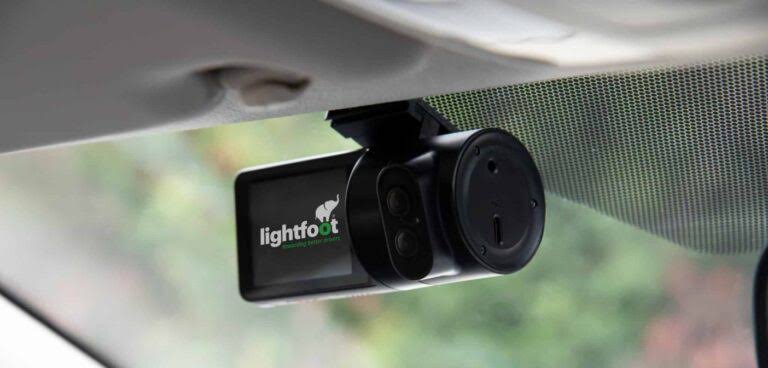
Geotab offers three types of video cameras. First, the road-facing GO Focus records the road ahead.Next,the dual-facing GO Focus Plus adds in-cab alerts that warn drivers about risks. Finally, theGO FocusPro adds 360-degree cameras and continuous AI analysis. All camera data flows intoMyGeotab. There,it works with the platform’s telematics, GPS, and DVIR tools.
In a large pilot, Geotab reported strong results from the GO Focus Plus. Its voice alerts cut tailgatingby90% and phone use by 95%. In addition, the platform offers custom alerts for repeat violationsandsafety scores for each driver. Overall, Geotab stands out for its strong telematics tools. However,itscameras were added later rather than built into one unified system.
Geotab features
- Smart Sequence coaching: Severity-based event reviews prioritize the most critical clips for manager attention, reducing time spent on low-risk footage.
- In-cab verbal alerts: Real-time voice prompts notify drivers of risky behaviors as they happen, turning each alert into a self-correction opportunity.
- Safety Overview dashboard: A centralized page surfaces daily fleet safety scores, ranked high-risk drivers, and industry benchmarking data.
Geotab pros and cons
Pros:
- Verbal in-cab alerts provide immediate, hands-free driver feedback without requiring drivers to look at a screen.
- The MyGeotab ecosystem offers an open API and marketplace for third-party integrations.
- Configurable escalation alerts automatically flag repeat violations, helping safety managers focus on drivers who need intervention.
Cons:
- Camera hardware is a modular add-on to the core telematics platform, not a natively unified safety-and-operations system.
- The 360-degree auxiliary camera option is limited to the GO Focus Pro tier, which requires a higher-level commitment.
- Fleets that need integrated dispatch, load execution, or freight matching tools alongside video will need to add separate applications.
5. Verizon Connect: Edge-computing dash cams
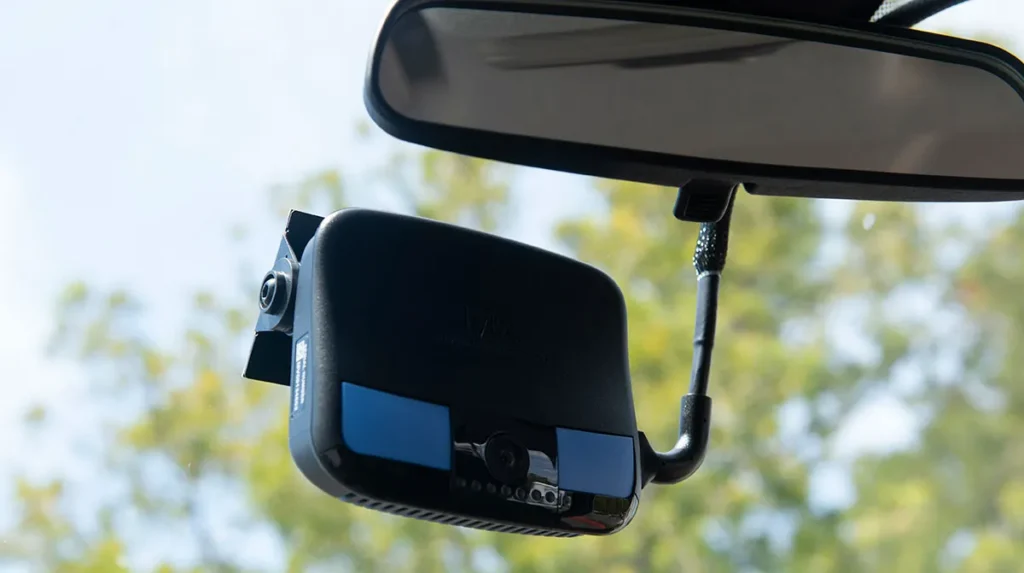
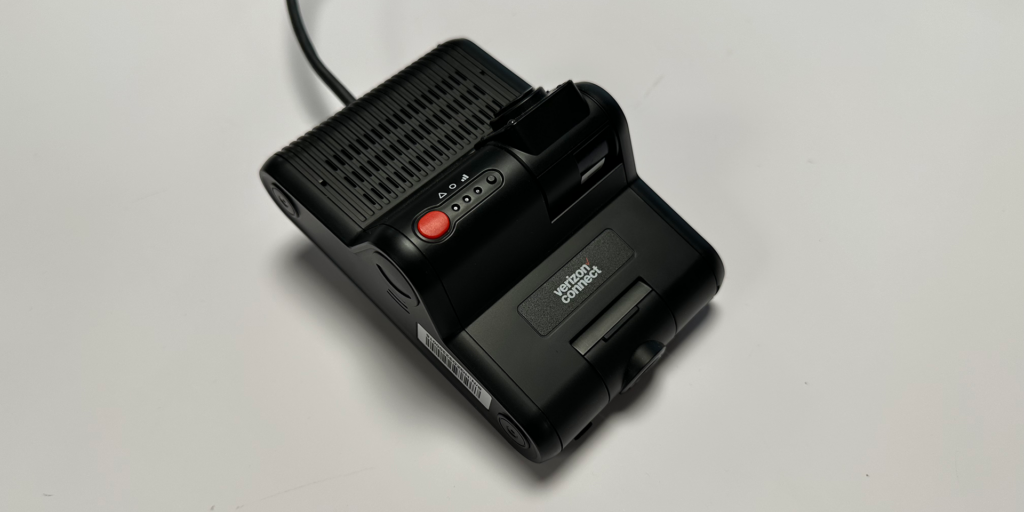
Verizon Connect’s AI dashcam uses edge computing to spot risky driving habits. For example, itdetectstailgating, phone use, drowsiness, and smoking. When the system spots a risk, it sends aninstantaudio alert inside the cab. This helps drivers correct their actions right away. Next, a cloud-basedvideo system reviews each event. It then ranks events as Critical, Major, Moderate, or Minor.
In addition, the platform creates daily reports that score driver safety. Managers use these reportsandvideo clips to guide driver coaching. This helps them track risks and improve driver habits overtime. However, the dashcam solution does not include built-in ELD, HOS tracking, or dispatch tools.
Verizon Connect features
- Edge-plus-cloud AI: On-device processing detects events instantly while cloud AI validates and classifies severity, balancing speed with accuracy.
- Daily safety scoring: Driver performance summaries aggregate behavior data into a single score, giving managers an at-a-glance risk view.
- Extended view camera bundles: Side-mounted cameras expand visibility to reduce blind spots around the vehicle.
Verizon Connect pros and cons
Pros:
- Edge-computing processes events at the device level, delivering in-cab audio alerts with minimal latency.
- Cloud AI classification into four severity tiers helps managers prioritize review time.
- Extended view camera bundles add side-angle coverage for fleets operating in dense urban or dock environments.
Cons:
- The dashcam platform operates separately from ELD, HOS, and dispatch systems, requiring additional tools for full operational visibility.
- Event classification flexibility is limited to a 14-day window for reclassification after occurrence.
- Fleets that need unified coaching, compliance, and execution data in one view will need to integrate multiple Verizon Connect products or third-party tools.
6. Platform Science: Open connected-vehicle DashCam
Platform Science’s DashCam is part of its wider PS Fleet app suite. This suite includes PS CommandCenterfor dispatch, PS Coach for driver coaching, and PS Visual Intelligence for video review. TheDashCamuses AI to process data inside the device. It has an ultra-high-definition road-facingcamera and a high-definition driver-facing camera. In addition, it connects directly to the vehicle’sJ1939 or RP1226 data port.
Next, PS Visual Intelligence combines AI-reviewed video with live fleet data. This helps officeteamsunderstand what happened during each event. Furthermore, the open platform lets fleetscombinePlatform Science tools with third-party apps. As a result, large fleets can build a system thatfitstheir needs. This approach is especially useful for companies that already use other fleet technology.
Platform Science features
- PS Visual Intelligence: Multi-angle video synchronized with GPS, speed, and braking data gives coaching sessions full event context.
- Edge-plus-cloud validation: Truck-side AI flags events instantly while cloud AI confirms accuracy, reducing false positives sent to managers.
- PS Coach: A dedicated coaching module enables safety teams to manage driver performance from the same platform as video review.
Platform Science pros and cons
Pros:
- The open platform model supports custom integrations with third-party telematics, TMS, and ERP systems.
- UHD road-facing resolution with a 140-degree field of view captures fine detail for incident review and evidence.
- PS Fleet’s modular app suite lets carriers add dispatch, coaching, and visibility modules as their operation grows.
Cons:
- The modular design means fleets must assemble their safety-and-operations stack from separate PS Fleet apps rather than starting with a unified view.
- Camera hardware installation connects through the vehicle data port, which may require compatibility verification for certain older vehicle models.
- Compliance tools like ELD and DVIR management are not native to the PS Fleet suite, requiring a third-party provider.
Comparison table: The best AI dash camera platforms for fleets
| Platform | Unified Safety + Operations View | Native ELD/HOS Integration | AI Coaching Automation |
| Konexial | ✓ | ✓ | ✓ |
| Samsara | ✗ | ✗ | ✓ |
| Motive | ✗ | ✗ | ✓ |
| Geotab | ✗ | ✓ | ✓ |
| Verizon Connect | ✗ | ✗ | ✓ |
| Platform Science | ✗ | ✗ | ✓ |
F.A.Q
An AI dash camera is a vehicle-mounted camera that uses artificial intelligence to detect unsafe driving behaviors in real time. It captures road-facing and driver-facing video, flags events like distraction or tailgating, and routes alerts to fleet managers. Konexial integrates this video data with ELD, DVIR, and dispatch tools inside one platform.
AI dash cameras spot events and rank their risk level automatically. As a result, your safety team canfocuson the most serious risks. Konexial’s Ki™ system sends flagged events to the right manager with key details. This cuts review time and helps managers coach drivers sooner.
Yes. AI dash cameras create timestamped, GPS-verified video records that serve as compliance evidence during audits and insurance reviews. Konexial stores this footage alongside HOS logs and DVIR records in a unified archive, simplifying evidence retrieval under time pressure.
Installation time depends on the system. However, Konexial’s AI Dash Camera takes about ten minutestoinstall. It uses a locking mount and does not need a trained tech. As a result, vehicles spendless time off theroad during setup.
A standalone dash camera records video without connecting it to broader fleet data. Video telematics platforms like Konexial synchronize camera footage with ELD, GPS, HOS, and route execution data so your team sees full operational context alongside every video event.
Konexial keeps trucking and transportation fleets moving efficiently, with ELDs, AI dash cameras, trailer tracking, and fuel and safety solutions built into one connected platform. Powered by Ki™ technology, we turn real-time data into AI-driven insights that help you predict disruptions, optimize performance, and stay ahead of every mile.