Compliance Checklists
 Fleet Trailer Tracking Integration Guide for 2026
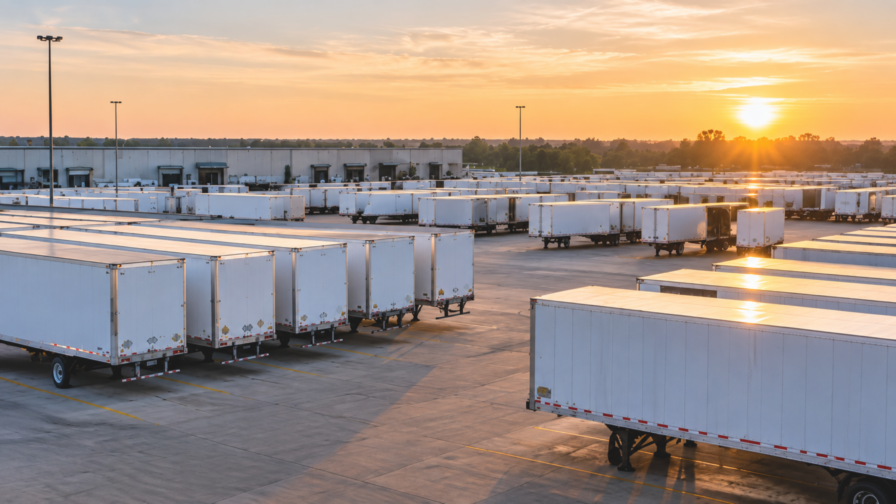
Every trailer sitting idle in a yard you cannot see is costing your operation money. Lost trailers, unplanned detention, untracked assets, and disconnected data between your tracking devices and fleet management software create cost-to-serve leaks that compound over time. For mid-sized fleet managers running 50 to 500 trailers, the gap between knowing where your power units are and knowing where your trailers are represents one of the most expensive blind spots in transportation today.
This guide covers everything you need to know about integrating trailer tracking systems with fleet management software. You will learn how to evaluate tracking hardware, connect it to your existing TMS and ERP, and build a unified view of every asset in your operation. Konexial gives you a single platform that unifies trailer GPS tracking, telematics, dispatch, and compliance data so your Transportation and Safety teams see the same information in real time.
By the end, you will have a clear framework for selecting, integrating, and optimizing trailer tracking across your fleet.
Key Takeaways: Fleet Trailer Tracking Integration Guide for 2026
- Trailer tracking integration eliminates asset blind spots by connecting GPS data directly to your fleet management software.
- Mid-sized fleets benefit most when tracking data flows into a unified dashboard alongside dispatch, compliance, and maintenance.
- Choosing the right hardware means matching power source, update frequency, and durability to your specific trailer behavior.
- Konexial connects trailer tracking with telematics, ELD, and TMS data in one platform powered by Ki™ intelligence.
- A phased integration approach reduces disruption and lets you validate results before scaling across your full fleet.
What Is Trailer Tracking System Integration?
Trailer tracking system integration is the process of connecting GPS-enabled tracking devices on your trailers to your fleet management software, TMS, or ERP. The goal is to create a single source of operational truth where trailer location, movement history, dwell time, and utilization data appear alongside your power unit and driver information.
Without integration, tracking data lives in a separate application. Your dispatch team checks one screen for truck locations and another for trailer positions. That disconnect slows decision-making, increases yard search time, and hides utilization problems that erode margins.
Integrated tracking closes that gap. When your TMS receives real-time trailer location and status updates, dispatchers can assign the nearest available trailer without phone calls or yard checks. Your operations team can measure dwell time, flag underused assets, and reduce unnecessary lease renewals based on actual data.
Why Mid-Sized Fleets Need Integrated Trailer Visibility
Mid-sized fleets evaluating trailer tracking systems face a unique operational challenge: they have enough trailers that manual tracking breaks down, but may not have the IT resources of a large enterprise carrier. That makes integration both more urgent and more difficult to execute.
A Tompkins Ventures analysis found that one national fleet returned 200 trailers after deploying tracking software, producing an 800% return on investment. The fleet had assumed it needed more capacity. In reality, it had a visibility problem masquerading as a capacity problem.
For your operation, the same principle applies. If you cannot see trailer utilization across all your yards and customer locations, you are likely leasing or purchasing assets you do not need. Integrated tracking turns that hidden cost into visible, actionable data.
How Disconnected Tracking Creates Operational Drag
When trailer data sits in a standalone portal, your team has to switch between systems to build a complete picture. Dispatchers spend time hunting for trailers. Safety managers lose visibility into DVIR completion status. Finance teams cannot validate detention invoices against actual arrival and departure timestamps.
Each of these gaps creates cost-to-serve leaks. They are small individually, but they compound across dozens of yards and hundreds of trailers. Integration eliminates the context-switching and puts every data point in the same view your team already uses for dispatch and compliance.
How to Evaluate Trailer Tracking Hardware for Integration
The right hardware decision depends on how your trailers behave in the real world. A trailer that sits in a distribution yard for weeks at a time has different tracking needs than one running long-haul routes five days a week.
Power Source: Solar vs. Battery
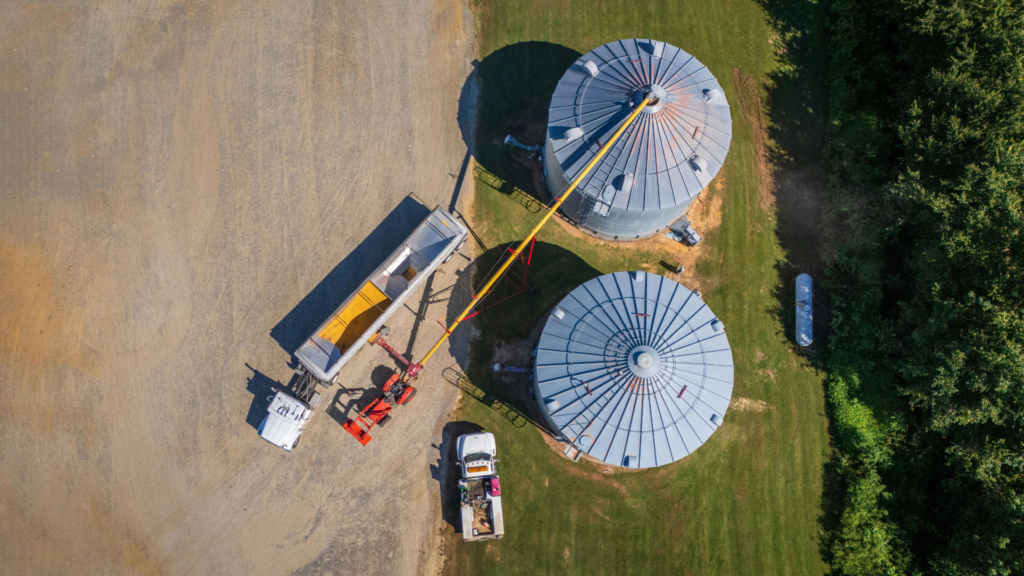
Solar-powered trackers work well for trailers that spend significant time outdoors and in transit. They recharge during daylight hours and reduce battery replacement maintenance. Battery-powered devices are better suited for trailers that spend extended periods in covered yards, warehouses, or under load covers where solar recharge is unreliable.
Konexial offers solar-powered GPS trailer trackers with LTE connectivity and optional satellite backup for coverage in remote areas. The devices install without wires or cables, making fleet-wide deployment straightforward.
Update Frequency and Battery Life Trade-offs
Higher update frequency gives you more granular location data, but it drains battery faster. For most fleet operations, movement-triggered updates combined with scheduled heartbeat check-ins offer the right balance. The tracker wakes when the trailer moves, transmits location data, and returns to low-power mode when stationary.
Configurable update rates let you adjust reporting behavior by trailer type. High-value refrigerated trailers might warrant more frequent updates, while dry van trailers in predictable routes can report less often without sacrificing operational visibility.
Durability and Environmental Ratings
Trailers face road debris, temperature extremes, vibration, and wash-down conditions. Your tracking hardware needs an IP67 or IP68 rating to protect against dust and water ingress. Compact, wire-free devices simplify installation and reduce the risk of damage during loading and unloading.
What to Look for in Fleet Management Software Compatibility
Not every fleet management platform integrates with trailer tracking systems the same way. Before selecting a tracking device, confirm that your software can ingest and display trailer data alongside your existing vehicle and driver information.
API and Data Format Support
Your tracking hardware and fleet management software need a common data pathway. Most modern trackers transmit data via cellular networks using standard protocols. Your fleet software should accept that data through an API or direct integration, converting raw GPS coordinates into map positions, geofence alerts, and utilization reports.
Konexial’s Geo-Operations Platform connects trailer tracking data with telematics, ELD, dispatch, and compliance information through its Horizontal Integration Layer. This means your TMS, ERP, ELD, and telematics systems feed into one unified control tower.
Geofencing and Automated Alerts
Geofencing creates digital boundaries around yards, customer sites, and terminals. When a trailer enters or exits a geofenced area, the system logs the event and triggers configurable alerts. This automates arrival and departure tracking, replaces manual yard checks, and creates an auditable record for detention billing.
For your Safety team, geofence data also confirms that trailers are staged in approved locations and that assets flagged for maintenance are not dispatched prematurely.
Role-Based Dashboards and Reporting
Your Transportation team, Safety team, and finance department all need different views of the same data. Look for a platform that supports role-based dashboards so each team sees the metrics that matter most to their function. Dispatch needs real-time location and availability. Safety needs DVIR status and inspection alerts. Finance needs dwell time and utilization reports for cost analysis.
Konexial’s Analytics and Platform Visibility module delivers configurable, role-based dashboards that surface the right data to the right team without requiring custom development.
Step-by-Step Trailer Tracking Integration Workflow
A phased approach reduces disruption and lets you validate results before committing to a full fleet rollout. Here is a practical integration workflow built for mid-sized fleet operations.
Step 1: Audit Your Current Trailer Inventory and Data Sources
Start by documenting every trailer in your fleet, including owned, leased, and customer-owned assets. Record current tracking status, any existing GPS devices, and which software platforms hold trailer-related data. This audit reveals how fragmented your current visibility is and identifies quick wins for early integration.
Step 2: Define Your Integration Requirements
Determine what data needs to flow between your tracking devices and fleet management software. At minimum, you need real-time location, movement history, geofence events, and utilization metrics. If your operation also requires DVIR data, temperature monitoring, or door-open sensors, factor those into your hardware selection.
Step 3: Select Hardware and Platform
Choose tracking devices that match your trailer behavior profiles and confirm compatibility with your fleet management software. If you are evaluating a new platform, prioritize one that natively supports both powered and non-powered asset tracking alongside ELD, telematics, and dispatch.
Step 4: Pilot with a Representative Trailer Subset
Deploy trackers on 10% to 15% of your fleet, selecting trailers across different use cases: long-haul, regional, yard-heavy, and customer-site staging. Run the pilot for 30 to 60 days. During this period, validate data accuracy, confirm geofence reliability, and measure the actual time savings for your dispatch and yard teams.
Step 5: Refine Configuration and Roll Out
Use pilot data to adjust update frequencies, geofence boundaries, and alert thresholds. Then scale to the full fleet in phases, starting with the trailer groups that showed the highest utilization gaps during the pilot. Monitor key metrics like yard search time, detention accuracy, and trailer-to-load ratio as you expand.

How Trailer Tracking Integration Improves Fleet Asset Visibility
Integrating trailer tracking systems with your fleet management software turns standalone location data into an operational intelligence layer. Here is how that visibility translates into measurable operational improvements.
Utilization Optimization and Right-Sizing
When you can see exactly how often each trailer moves, how long it sits idle, and where it spends most of its time, you can make data-driven decisions about fleet size. Fleets that deploy integrated tracking often discover that 10% to 20% of their trailers are underutilized. Returning those assets to lessors or reallocating them to busier lanes eliminates carrying costs without reducing capacity.
Detention and Dwell Time Accuracy
Automated geofence logging captures precise arrival and departure times at every customer site. This eliminates disputes over detention charges and gives your finance team verified data to support invoicing. For your customers, it creates transparency that strengthens the relationship.
Theft Prevention and Recovery
Real-time movement alerts and geofence exit notifications help you catch unauthorized trailer movements within minutes. If a trailer moves outside of scheduled hours or leaves a geofenced yard, the system flags the event immediately. That speed of response can mean the difference between recovering the asset and filing an insurance claim.
Maintenance Planning and DVIR Compliance
Connecting trailer tracking with your maintenance and DVIR workflows ensures that inspection data follows the asset, not just the driver. When a driver completes a pre-trip or post-trip inspection, the results attach to the specific trailer record. Your Safety team can see which trailers have open defects, which are cleared for dispatch, and which are overdue for scheduled maintenance.
Konexial’s Asset Management and DVIR module digitizes the entire inspection process and ties it directly to trailer identity and location data, giving your Transportation and Safety teams a shared view of asset condition.
Common Integration Challenges and How to Solve Them
Integration is not always smooth. Here are the most common obstacles mid-sized fleets encounter and practical ways to address them.
Data Silos Between Tracking and TMS
Many fleets start with a tracking device from one vendor and a TMS from another, with no native connection between them. The fix is either a direct API integration or a platform that natively supports both functions. Konexial’s Horizontal Platform and Integrations capability connects existing systems into a single dashboard view, eliminating data silos without requiring you to replace your current tools.
Mixed Hardware Across the Fleet
If you have acquired trailers through mergers, leases, or customer relationships, you may have multiple tracker brands and models in your fleet. Look for a fleet management platform that can aggregate data from multiple device types into one normalized view. A platform-agnostic integration layer ensures you are not locked into a single hardware vendor.
Driver and Team Adoption
New technology only delivers value when your team uses it. Targeted training for dispatchers, yard managers, and safety staff focuses on how the integrated system saves them time and reduces manual work. When your dispatch team can find the nearest available trailer in seconds instead of making phone calls, adoption follows naturally.
Konexial’s onboarding is tailored to your specific workflows, with U.S.-based support and weekly platform updates so your team is never left managing adoption alone.
How Ki™ Intelligence Powers Smarter Trailer Tracking
Trailer tracking generates a large volume of location, movement, and status data. The real value comes from turning that raw data into operational decisions before costs lock in.
Ki™, Konexial’s proprietary intelligence engine, continuously ingests data from trailer GPS trackers, ELDs, telematics, QR scans, TUIDs, geofences, and third-party systems. It processes that data in near real time to surface execution exceptions, flag underutilized assets, and trigger automated workflows without manual intervention.
For your operation, this means your fleet management software does not just show you where trailers are. It tells you which trailers need attention, which routes have recurring dwell time problems, and which assets are candidates for reallocation or return.
What Role Do TUIDs Play in Trailer Tracking Integration?
A Transport Unique Identifier, or TUID, assigns a persistent digital identity to each trailer, load, or asset. Think of it as a serial number that follows the asset across every system and every partner in the supply chain.
TUIDs eliminate ambiguity when multiple parties handle the same trailer. They validate custody, prevent double brokering, and create an auditable chain of possession from origin to destination. When your tracking system assigns a TUID to each trailer, the data attached to that asset stays consistent across your TMS, ERP, and any external partner platforms.
Konexial’s TUID capability integrates directly with the Geo-Operations Platform, ensuring that every trailer in your fleet has a verifiable digital identity that persists across loads, routes, and partners.
How to Measure the ROI of Trailer Tracking Integration
Tracking integration pays for itself through measurable operational improvements. Here are the key metrics to monitor.
Trailer Utilization Rate
Measure the percentage of your trailer fleet that moves at least once per week. Before integration, many fleets find this number is lower than expected. After integration, you can identify idle assets and either redeploy them or return them to reduce lease costs.
Yard Search Time
Track how long it takes your dispatch or yard team to locate a specific trailer. With integrated real-time tracking, this should drop from minutes or hours to seconds.
Detention Dispute Resolution
Measure the percentage of detention charges that are disputed by customers versus verified by geofence data. Integrated systems automate this validation, reducing disputes and accelerating payment cycles.
Maintenance Compliance Rate
Track the percentage of trailers with current DVIRs and completed scheduled maintenance. Integration ensures that inspection and maintenance data follows the trailer, reducing the risk of dispatching an asset with open defects.
In Conclusion: Building End-to-End Trailer Visibility for Your Fleet
Implementing trailer tracking systems is not just a technology project. When integrated with your fleet management software, it becomes an operational strategy that eliminates asset blind spots, reduces cost-to-serve leaks, and gives your Transportation and Safety teams the unified view they need to act before costs lock in.
Start with a clear audit of your current trailer inventory and data sources. Select hardware that matches your trailer behavior. Choose a platform that natively connects tracking with dispatch, compliance, and maintenance. Pilot with a representative subset, measure the results, and scale with confidence.