Compliance Checklists
 AI Cannot Prevent What It Cannot See: Why Connected Data Matters for Fleet Safety
Operation Safe Driver Week shines a spotlight on risky driving behaviors and the importance of improving safety across the transportation industry. While enforcement initiatives raise awareness, they also highlight a challenge many fleets face every day of the year: having plenty of safety data but very little connected insight.
Today’s fleets generate an enormous amount of information. Electronic logging devices (ELDs) record hours-of service activity. AI dash cameras capture critical driving events. Telematics platforms monitor vehicle location and performance. Driver scorecards identify risky behaviors. Maintenance records, DVIRs, inspections, coaching documentation, and compliance reports all contribute valuable information.
The problem is not a lack of data.
The problem is that the data often lives in separate systems that cannot easily communicate with one another.
As artificial intelligence becomes more common across transportation, many providers promote AI as the solution to fleet safety. But AI has one significant limitation:
AI cannot prevent what it cannot see.
Without connected data, even the most advanced AI fleet safety platform is forced to make decisions using only part of the picture.
Why an AI Fleet Safety Platform Needs Connected Data
Transportation companies have invested heavily in technology over the last decade. Most fleets now have access to more operational information than ever before.
However, those investments frequently happened over time, resulting in multiple systems that each solve one specific problem.
For example:
- An ELD manages hours of service compliance.
- A camera platform records safety events.
- A telematics system tracks GPS location.
- Driver coaching is documented in spreadsheets.
- Maintenance information is stored separately.
- Claims records live in another application.
- Compliance documentation is filed somewhere else.
Each platform serves an important purpose.
The challenge begins when safety managers need to understand what actually happened during an incident, or, even more importantly, identify risk before an incident occurs.
Instead of reviewing one complete story, they often spend valuable time switching between systems, searching through records, matching timestamps, and manually piecing together the facts.
That process slows investigations, delays coaching, and makes proactive safety management much more difficult. Without connected information, even the most advanced AI fleet safety platform can only analyze part of the overall risk picture.
The Difference Between Visibility and Prevention
Many fleet technologies provide visibility.
Visibility answers questions like:
- What happened?
- When did it happen?
- Where did it happen?
Those answers are valuable. But prevention requires much more.
Imagine a harsh braking alert appears on a driver’s record. By itself, the event tells you very little.
To understand whether intervention is needed, additional context matters:
- Has this driver experienced similar events recently?
- Was the driver approaching an HOS limit?
- Did the AI dash camera confirm the event?
- Was traffic unusually heavy?
- Were weather conditions contributing factors?
- Was the vehicle experiencing a maintenance issue?
- Was the driver under schedule pressure?
- Has coaching already been completed for similar behavior?
- Was follow-up documented?
Looking at a single alert rarely provides enough information to make the right decision. Looking at connected information tells a much more complete story.
This is where AI becomes significantly more valuable.
Instead of simply generating another notification, AI can prioritize the events that deserve immediate attention, identify recurring patterns, surface coaching opportunities, and help safety teams focus on the highest-risk drivers before problems escalate.

AI Is Only as Good as the Data Behind It
Artificial intelligence is rapidly changing fleet management, but AI should not be viewed as magic. Its recommendations depend entirely on the quality and completeness of the information it receives.
When important safety signals are isolated across multiple systems, AI cannot identify relationships between them. For example, an AI model may detect repeated speeding events, but it may not recognize that those events consistently occur near the end of a driver’s available hours.
A camera may identify distracted driving, but without access to coaching history, the system cannot determine whether previous interventions were effective.
Maintenance records may indicate recurring brake issues, but if they are disconnected from driver behavior data, AI cannot evaluate whether equipment problems contributed to specific events. Incomplete information creates incomplete intelligence. Connected information creates actionable intelligence.
Rather than overwhelming safety managers with alerts, AI can begin answering more meaningful questions:
- Which drivers show emerging patterns of risky behavior?
- Which coaching sessions reduced future incidents?
- Which compliance concerns require immediate action?
- Which events deserve investigation first?
- Which operational factors are contributing to elevated risk?
Those answers help fleets move beyond reacting to incidents and toward preventing them.
Why This Matters During Operation Safe Driver Week
Each year, Operation Safe Driver Week reminds the transportation industry that risky driving behaviors remain a leading concern.
Law enforcement agencies increase education and enforcement efforts related to behaviors such as speeding, distracted driving, following too closely, improper lane changes, and other unsafe actions.
For fleets, this week serves as an important checkpoint. However, safe driving should never depend on one week of heightened enforcement.
The same risks exist every day throughout the year.
Unsafe driving behaviors, incomplete coaching, hours of service exposure, missing documentation, and inconsistent follow up all contribute to operational risk long after Operation Safe Driver Week ends.
Q3 often places additional pressure on fleet operations as freight demand fluctuates, weather conditions change, and production schedules accelerate.
During busy operating periods, disconnected safety processes become even more difficult to manage.
The goal should not be collecting more alerts. The goal should be connecting the information needed to make faster, smarter decisions.
Connected Intelligence Creates Better Safety Outcomes
Modern fleet safety depends less on generating additional data and more on organizing existing information into one connected operational view.
When safety information is unified, fleets gain several advantages.
Faster Investigations
Safety managers spend less time searching through multiple systems and more time resolving issues quickly.
Better Driver Coaching
AI can identify recurring behaviors earlier, helping managers deliver coaching before risky habits become serious safety concerns.
Improved Compliance Documentation
Coaching records, inspection data, HOS information, and supporting documentation remain connected, making audits and internal reviews easier to manage.
More Effective Risk Prioritization
Rather than reviewing hundreds of alerts equally, safety teams can focus first on the drivers and events that present the greatest operational risk.
Better Long Term Safety Performance
Over time, connected data helps organizations identify trends, measure coaching effectiveness, and continuously improve safety programs.
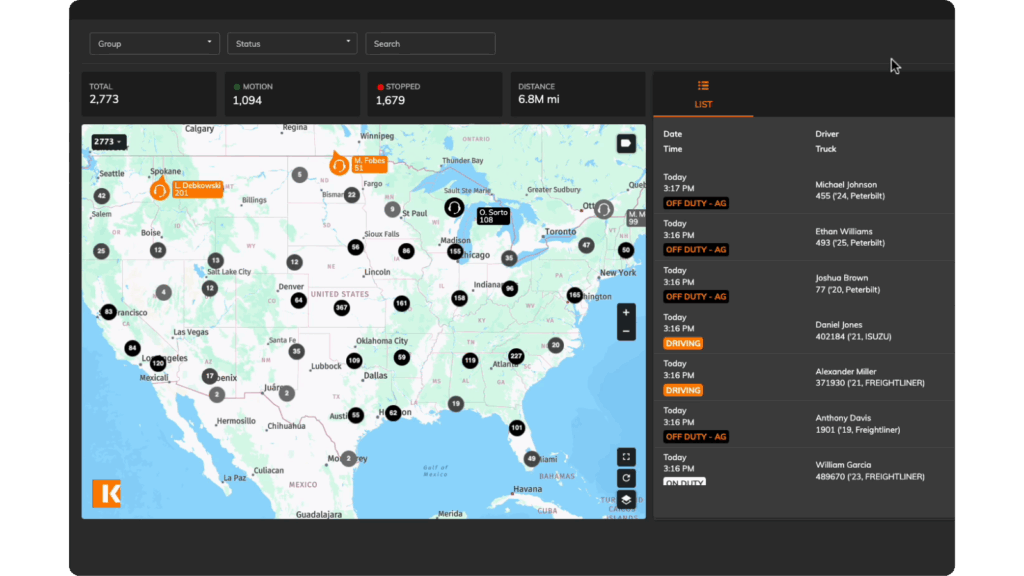
How Konexial Delivers a Connected AI Fleet Safety Platform
At Konexial, we believe AI should simplify fleet operations, not create another disconnected dashboard.
Our connected platform brings together the information safety and compliance teams rely on every day, helping fleets move beyond isolated alerts and toward meaningful action.
Organizations can use Konexial ELDs, AI powered dash cameras, and connected telematics as part of one integrated platform designed to improve visibility, safety, and compliance.
For fleets that already have technology investments in place, Konexial can also centralize information from existing ELD and camera providers where data access and integrations are available, helping reduce operational silos without requiring a complete technology replacement.
Instead of forcing teams to piece together information manually, connected intelligence helps provide the context needed to:
- Prioritize the highest risk events
- Improve driver coaching
- Strengthen compliance workflows
- Accelerate investigations
- Document follow up actions
- Support proactive safety management
By connecting safety, compliance, and operational data, fleets gain a more complete understanding of risk, and more opportunities to prevent it.
The Future of Fleet Safety Is Connected
Artificial intelligence will continue transforming transportation, but its success depends on something much simpler than sophisticated algorithms.
It depends on connected data.
The fleets that achieve the greatest safety improvements will not necessarily be the ones with the most alerts or the most dashboards. They will be the organizations that unify safety, compliance, telematics, coaching, and operational information into one complete picture.
Because prevention starts with visibility, but it only becomes possible when every piece of the story comes together.
At Konexial, we’re helping fleets move beyond disconnected systems and toward connected intelligence that empowers teams to identify risk sooner, respond faster, improve driver coaching, and document every step along the way. That’s how AI becomes more than another feature, it becomes a practical tool for building safer, smarter fleet operations every day of the year.