Compliance Checklists
 AI Driver Coaching: Why AI Should Help Drivers Improve, Not Just Score Them
For years, fleet safety programs have relied heavily on driver scorecards. AI Driver Coaching is emerging as a transformative addition to these programs. These tools provide valuable insights into driver performance, helping safety managers identify risky behaviors such as speeding, harsh braking, rapid acceleration, and distracted driving.
But there is a critical question every fleet should ask:
Do scorecards actually improve driver behavior?
The answer is not always.
A scorecard can tell you what happened. It can rank drivers, measure trends, and highlight risk. However, a scorecard alone rarely creates meaningful behavioral change. Improvement happens when drivers receive timely coaching, understand the context behind an event, and are given clear guidance on what to do differently moving forward.
This is where AI driver coaching is transforming fleet safety management.
Rather than simply tracking events and assigning scores, modern AI solutions can help safety teams identify risk earlier, understand the factors contributing to unsafe behavior, and deliver more effective coaching that helps drivers improve before minor issues become major incidents.
The Limitation of Traditional Driver Scorecards
Driver scorecards have become a standard tool across transportation fleets. They provide measurable data that helps organizations evaluate driver performance and monitor safety trends.
The challenge is that scorecards are often reactive.
A fleet manager may discover that a driver accumulated several risky events over the past week or month, but by the time the data is reviewed, the opportunity for immediate intervention may have already passed.
In addition, scorecards frequently lack the operational context necessary to understand why an event occurred.
For example:
- – Was a harsh braking event caused by aggressive driving?
- – Did traffic conditions force the driver to stop suddenly?
- – Was the driver under dispatch pressure to meet a tight deadline?
- – Were there weather conditions impacting road safety?
- – Was the driver approaching Hours of Service limits?
- – Has the driver demonstrated similar behavior patterns previously?
Without context, safety managers are left interpreting isolated data points rather than understanding the complete story.
As fleets grow and data volumes increase, manually reviewing every event becomes nearly impossible. This creates a challenge for safety teams already balancing compliance, coaching, driver retention, and operational demands.
Why AI Powered Driver Coaching Changes the Safety Conversation
Artificial intelligence has the potential to move fleet safety beyond simple event detection.
Instead of asking safety managers to sift through thousands of alerts and incidents, AI can help prioritize what matters most.
The goal is not to replace safety professionals. The goal is to help them focus their time and attention where it can have the greatest impact.
AI powered driver coaching systems can analyze large volumes of operational and safety data simultaneously, identifying patterns that may not be obvious through traditional reporting methods. Platforms like Konexial’s integrated fleet solutions combine safety, compliance, driver performance, and operational intelligence to help fleets make faster, more informed decisions.
This allows fleets to answer important questions such as:
- – Which drivers are showing early signs of increased risk?
- – Which behaviors require immediate coaching?
- – Are multiple drivers experiencing similar challenges on specific routes?
- – Are operational pressures contributing to unsafe driving patterns?
- – Which events represent isolated incidents versus emerging trends?
When safety teams have access to these insights, coaching becomes more targeted, proactive, and effective.
Context Is What Makes AI Fleet Safety Valuable
One of the most powerful advantages of AI fleet safety coaching is its ability to connect multiple data sources and create context around driver behavior.
Consider a harsh braking event.
On a traditional scorecard, that event may simply appear as a negative mark against a driver’s safety score.
An AI powered system can provide a much deeper understanding by evaluating factors such as:
- Route conditions
- Traffic congestion
- Vehicle location
- Driver history
- Hours of Service status
- Dispatch schedules
- Camera footage
- Environmental conditions
Suddenly, what appears to be a simple harsh braking event becomes a more complete safety story. Perhaps:
- The driver reacted appropriately to avoid a collision.
- Recurring route conditions are creating increased risk.
- Dispatch schedules are unintentionally encouraging rushed driving behavior.
Understanding these contributing factors allows safety managers to coach more effectively and address root causes rather than symptoms.
Better Coaching Leads to Better Outcomes
The ultimate objective of fleet safety programs is not to catch drivers making mistakes.
It is to help drivers succeed.
Drivers are more likely to improve when coaching conversations are based on facts, context, and actionable recommendations rather than generic criticism.
AI helps make these conversations more productive by providing:
Earlier Intervention
Instead of waiting for safety scores to deteriorate, AI can identify warning signs before risk escalates.
Early intervention gives drivers the opportunity to correct behaviors before they become habits or lead to preventable incidents.
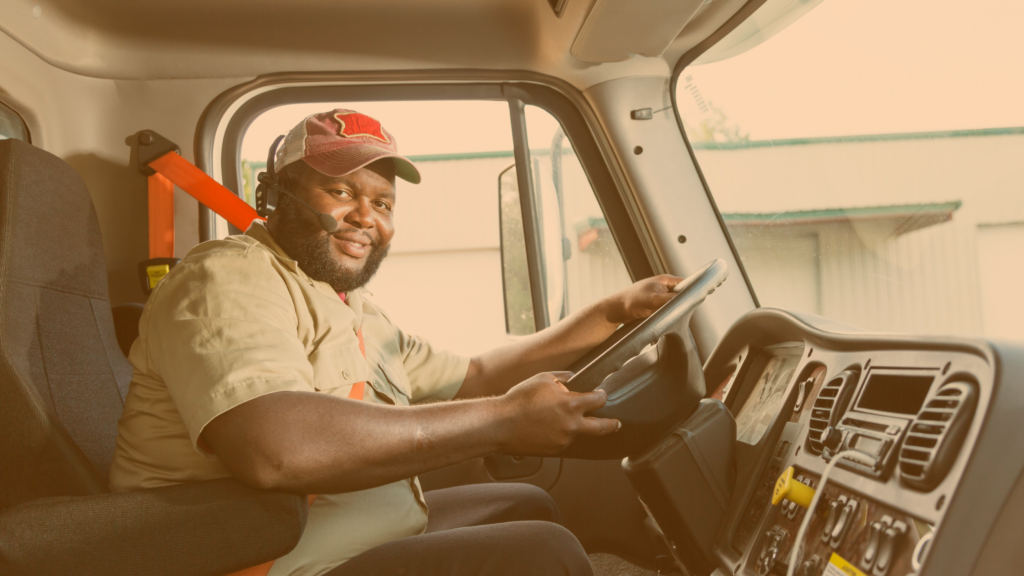
Personalized AI Powered Driver Coaching
Every driver faces different challenges.
AI can help identify individual coaching needs based on behavior patterns, route assignments, operating conditions, and historical performance.
This creates coaching programs that are more relevant and impactful.
Objective Discussions
Context-rich insights reduce guesswork and create more constructive coaching conversations.
Drivers are more receptive when they understand why a concern has been identified and how it relates to their daily operations.
Continuous Improvement
AI helps fleets move from periodic performance reviews to ongoing safety improvement.
Instead of reviewing past problems, organizations can focus on preventing future ones.
Reducing Safety Team Overload
One of the biggest challenges facing fleet safety departments today is information overload.
Telematics systems, cameras, compliance platforms, maintenance systems, and operational software generate massive amounts of data every day.
While access to data is valuable, too much information can create analysis paralysis.
Safety managers often struggle to determine:
- Which alerts require attention
- Which drivers need immediate coaching
- Which trends represent significant risk
- Where to allocate limited resources
AI safety workflows help solve this problem by filtering, prioritizing, and organizing information.
Rather than reviewing every event manually, safety teams can focus on the drivers, behaviors, and operational patterns that present the greatest risk to the organization.
This improves efficiency while helping ensure critical issues do not get overlooked.
Building a Proactive Safety Culture
The most successful fleets understand that safety is not simply about compliance.
It is about creating a culture of continuous improvement.
AI driver coaching supports this objective by helping organizations shift from reactive safety management to proactive risk reduction.
Instead of responding after incidents occur, fleets can identify potential concerns earlier and take action before problems escalate.
This approach benefits everyone involved:
- Drivers receive better coaching and support.
- Safety managers gain greater visibility into risk.
- Operations teams uncover hidden workflow challenges.
- Organizations reduce preventable accidents and associated costs.
Most importantly, fleets create safer environments for drivers and the communities they serve.
The Future of Fleet Safety Is Driver Focused AI
As artificial intelligence continues to evolve, its greatest value in transportation will not come from scoring drivers more accurately.
Its value will come from helping drivers improve.
The fleets that gain the most benefit from AI will be those that use it to provide context, prioritize coaching opportunities, identify operational risks, and support drivers before incidents occur.
Driver scorecards will continue to play an important role in fleet safety programs. However, the future belongs to organizations that combine performance data with intelligent insights that drive meaningful action.
Because safer fleets are not built by collecting more data.
They are built by helping drivers make better decisions every day.
Download Konexial’s AI Guide to explore practical use cases, implementation strategies, and real-world examples of how transportation companies are using AI to improve safety and operational performance.