Compliance Checklists
 The 3 Cost-to-Serve Leaks in Private Fleets
And how Transportation + Safety teams can spot them early
Private fleets are under pressure to maintain service levels while costs rise. In most organizations, margin erosion doesn’t come from one big failure — it comes from a few repeatable leaks that go unnoticed until after the cost is locked in. This checklist helps you identify the three most common cost-to-serve leaks in private fleets.
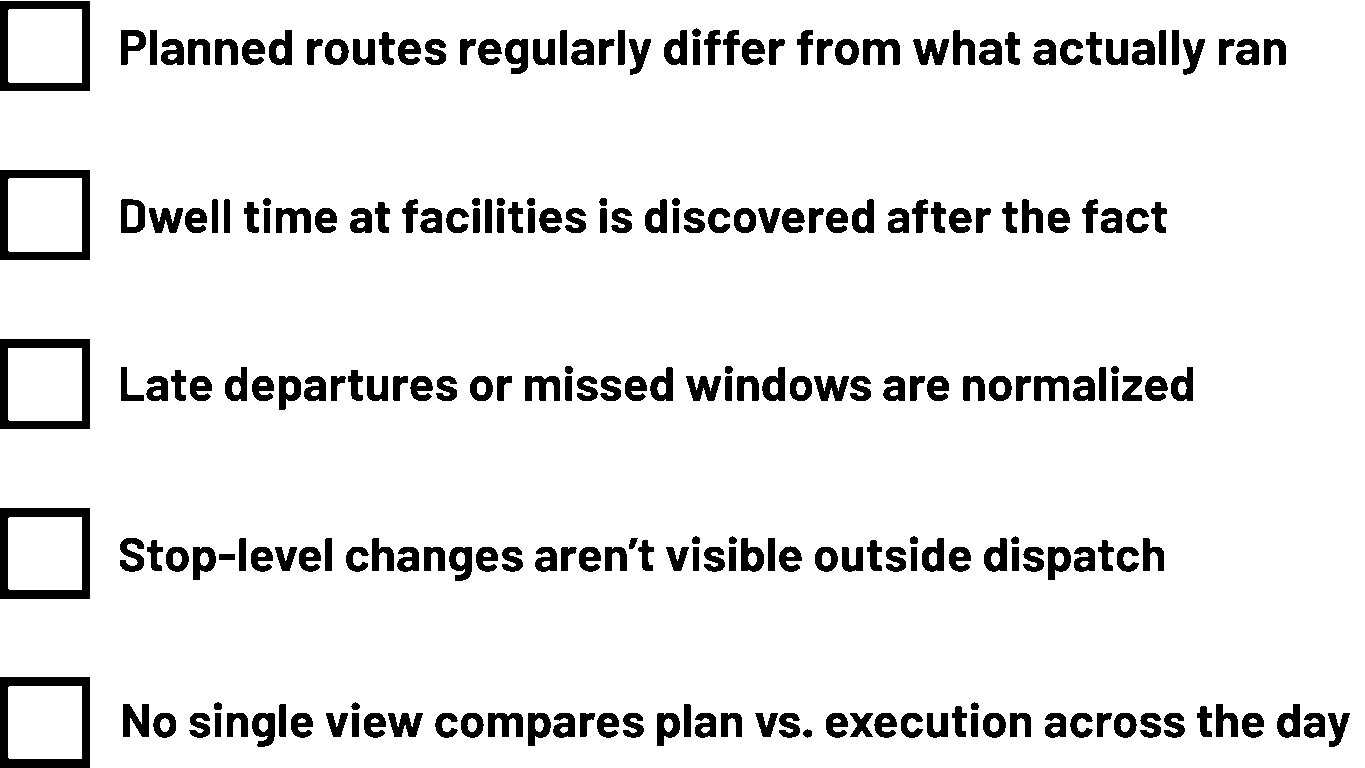
Leak #1: Planned vs. Actual Variance
(Routes, stops, dwell, facilities)
Why this leaks cost:
Unplanned variance increases labor hours, fuel spend, missed service commitments, and downstream safety risk — without being visible soon enough to correct.
Early warning question:
Do we see planned vs. actual performance in near real time — or only in reports later?
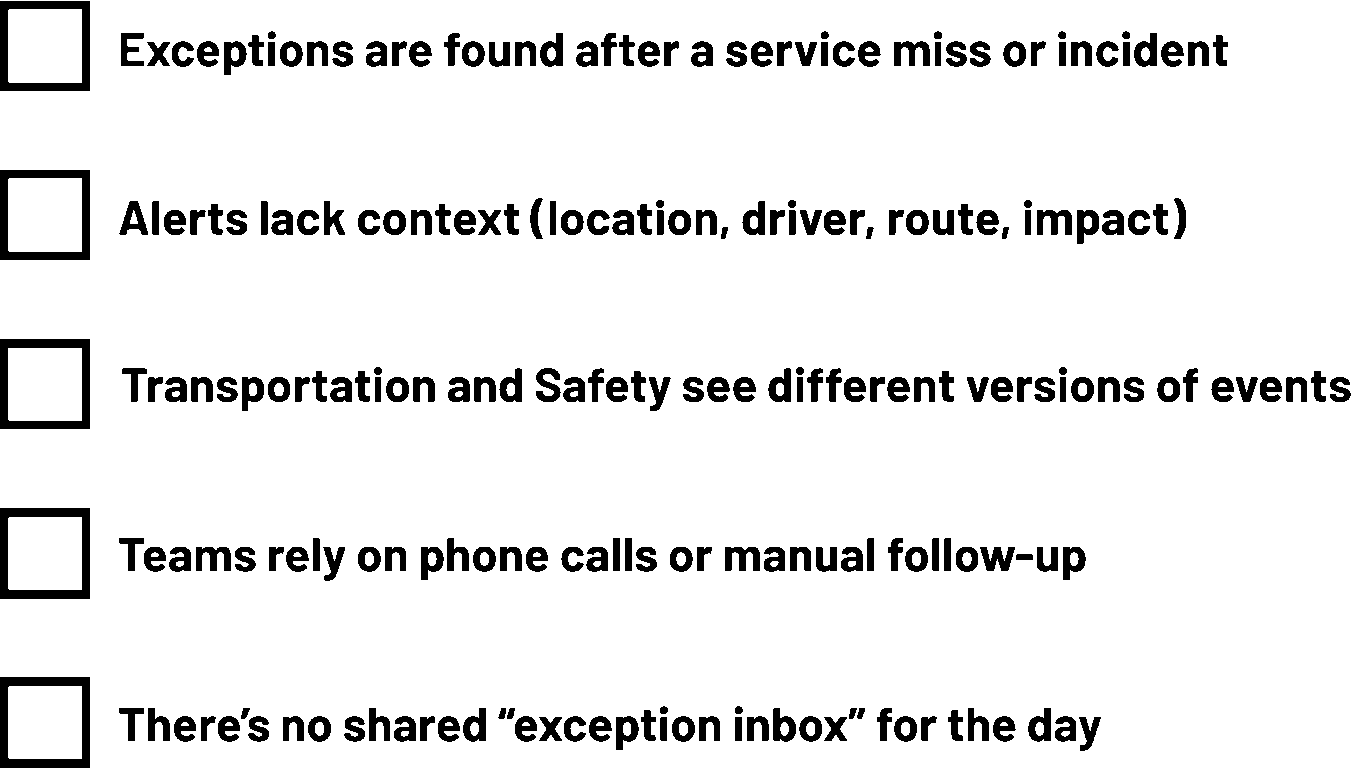
Leak #2: Exceptions Discovered Too Late to Fix
(Execution + safety events)
Why this leaks cost:
Late awareness turns manageable deviations into customer misses, safety exposure, and avoidable claims.
Early warning question:
Do we find out early enough to act — or only early enough to explain?
Leak #3: Safety Incidents That Quietly Inflate Risk
(Compliance, reserves, insurance pressure)
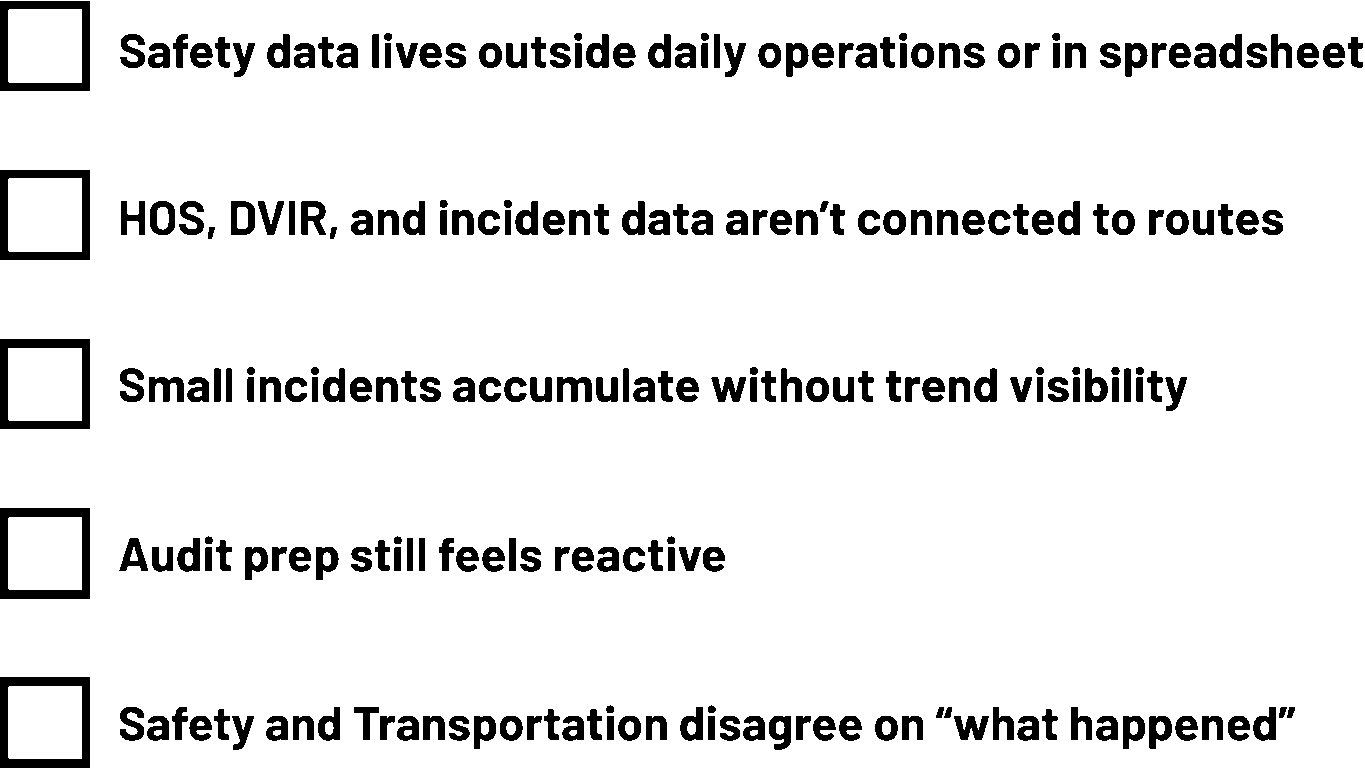
Why this leaks cost:
Incidents don’t just cost money when they happen, they increase reserves, insurance pressure, and operational friction over time.
Early warning question:
Can Safety and Transportation see the same event, in the same context, at the same time?
If one or more of these boxes feel familiar, the issue usually isn’t people or process — it’s fragmented visibility.The fastest-improving private fleets manage execution, exceptions, and safety from a single operating view.