Compliance Checklists
 FMCSA Designates English Proficiency ‘Safe Zones’.
In early 2026, a significant regulatory shift in the trucking industry has grabbed headlines and sparked broad discussion across freight circles: the Federal Motor Carrier Safety Administration (FMCSA) English proficiency safe zones designation. This new policy — part of larger changes to English Language Proficiency (ELP) enforcement — aims to balance safety enforcement with operational realities near the U.S.–Mexico border. Trucking companies, carriers, shippers, and logistics managers are now assessing how this pivots key trucking and freight industry trends and what it means for compliance, capacity, and workforce planning.
What Are FMCSA English Proficiency Safe Zones?
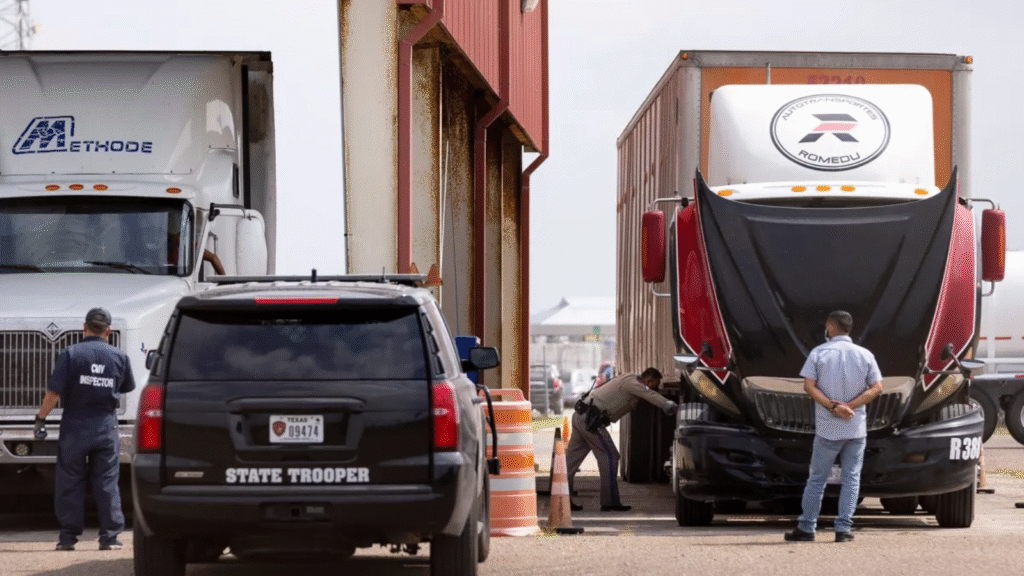
The FMCSA recently published guidance outlining geographic “safe zones” where commercial drivers will not be placed Out of Service (OOS) for failing English proficiency evaluations, even if they do not meet federal language requirements. This applies within certain commercial border zones, with distances varying by local population size. For example, areas like El Paso and surrounding counties in Texas and New Mexico. In these zones, inspectors may cite the language violation but must allow drivers to continue operations. This development comes amid a broader enforcement initiative that reinstates stricter ELP compliance nationwide. Previously, significant enforcement actions placed English proficiency violations squarely in out-of-service criteria for commercial drivers, meaning motorists unable to pass the two-step ELP test could be removed from active duty during inspections.

The Regulatory Backdrop: Enforcement and Safety
The renewed focus on English proficiency stems from a 2025 executive order intended to reinforce the longstanding federal requirement under 49 C.F.R. § 391.11(b)(2) that commercial drivers must “read and speak the English language sufficiently” to understand traffic signs, converse with safety officials, and complete required reports.
Prior to these changes, FMCSA’s 2016 policy instructed inspectors to issue citations but not place drivers out of service for ELP issues. A more lenient approach that many in the industry saw as undermining safety standards. The new policy reversed that stance, making English proficiency failures actionable as OOS violations outside of designated safe zones.
Supporters argue that this step improves highway safety and aligns enforcement with a clear statutory requirement that has been underapplied for years. Critics, including some state governments, have pushed back, arguing overreach and the economic implications of stringent enforcement. In fact, California recently sued FMCSA over withholding transportation funding tied to the English proficiency policy, characterizing the requirement as overly punitive.
How FMCSA English Proficiency Safe Zones Affect Operations
The introduction of FMCSA English proficiency safe zones affects the trucking and freight landscape in several material ways:
1. Operational Continuity in Border Areas
In key border commercial zones, drivers will now be cited but spared from immediate removal from service based on English tests. This reduces potential bottlenecks and preserves freight flows in heavily trafficked cross-border corridors. It also mitigates concerns among carriers of losing drivers mid-load simply for failing language checks.
2. Compliance Risk Outside Safe Zones
Outside designated areas, drivers who fail ELP tests can again face OOS orders, creating compliance risk for carriers operating nationwide routes. That places a premium on ensuring driver documentation, language training, and qualification plans are up to date to prevent costly disruptions at weigh stations or checkpoints.
3. Workforce Impacts and Market Sentiment
According to FMCSA data, thousands of drivers were cited for ELP violations during 2025 enforcement waves — underscoring the scale of compliance challenges carriers may face. Conversations among industry professionals reveal mixed attitudes: some folks on social forums see language compliance as vital for safety, while others worry over workforce shrinkage and capacity crunches if enforcement tightens further.
4. Safety vs. Capacity Balance
The FMCSA English proficiency safe zones initiative highlights an ongoing tension in trucking and freight industry trends — balancing roadway safety against capacity constraints in an already tight labor market. While stricter enforcement aims to reduce misunderstandings in safety-critical situations, some carriers fear the requirement could deepen driver shortages and disrupt supply chains.
Broader Policy and Industry Reactions
Nationally, the FMCSA’s reinvigorated enforcement of ELP standards reflects an assertive regulatory posture that overlaps with other compliance priorities such as CDL qualification rules, drug testing, and safety auditing. The renewed emphasis on language proficiency has become a focal point in broader discussions of industry regulation, immigration, and labor market strategy.
States have responded in various ways. With some welcoming the emphasis on safety, and others challenging federal enforcement tactics or pushing for state-specific approaches. Trucking associations and labor groups continue to weigh in publicly, underscoring how dynamic the policy environment has become.
What This Means for Your Business?
For carriers, shippers, brokers, and logistics service providers, the FMCSA English proficiency safe zones designation is more than a regulatory footnote — it’s a trend shaping compliance strategies, risk management, and operational planning in 2026. Ensuring drivers meet ELP standards and understanding where and how enforcement applies. This will be critical to maintaining capacity, avoiding costly out-of-service events, and sustaining reliable freight movement.
TL;DR: The introduction of FMCSA English proficiency safe zones, coupled with renewed enforcement of language standards outside those zones, is reshaping key trucking and freight industry trends in 2026. This policy reflects safety priorities but also raises operational and compliance challenges for carriers nationwide. With implications for workforce qualification, enforcement exposure, and supply chain continuity, industry players must adapt with clear strategies and tools. Konexial helps companies navigate complex freight operations and regulatory compliance with flexible, data-driven solutions.